The Tesla Flying Roadster Demo: What Really Happened Behind the Scenes and What It Tells Us About AI Everywhere
Muchiri Mwangi
AI Automation Specialist
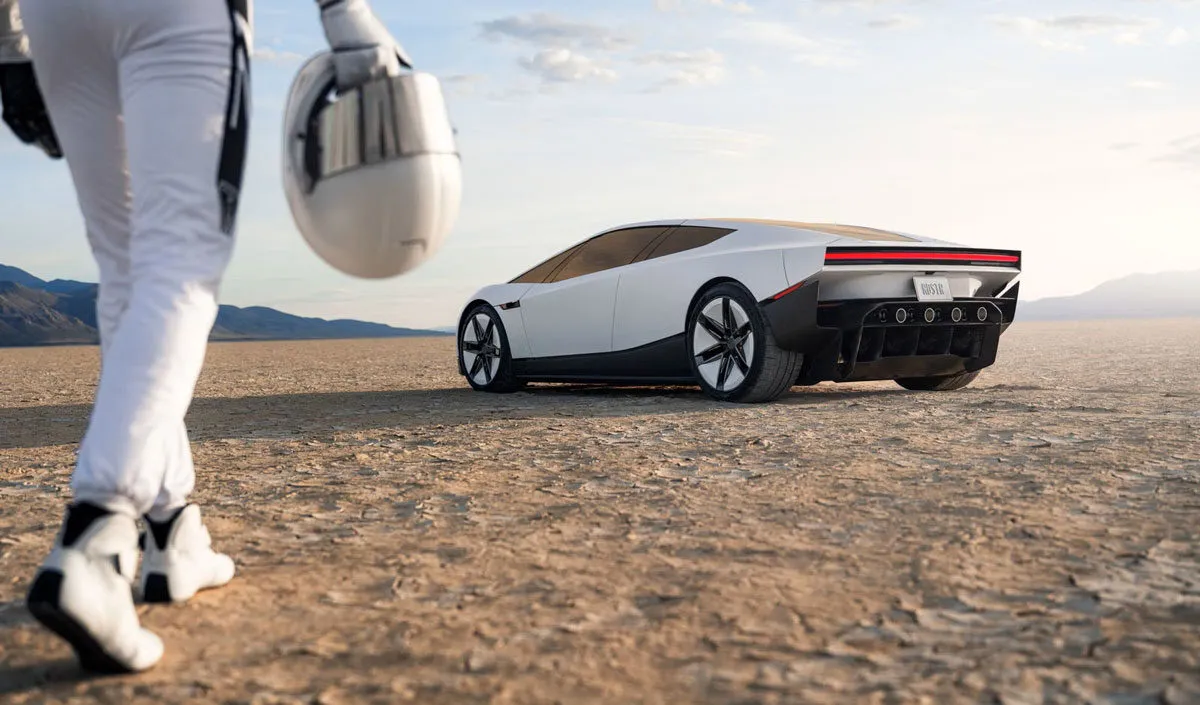
A car drives up a giant curved ramp, hangs upside down, spins off the top, fires a ring of thrusters and lands cleanly. Millions of people watched the clips and many asked the same question: is this real, or is this AI? The honest answer is more interesting than either. The stunt was real, but the car had no one in the driver's seat, and the software and remote systems doing the work were largely invisible to the crowd. This post sorts fact from speculation, and asks what happens when that kind of invisible intelligence reaches every industry.
What Actually Happened on October 15
According to reports from outlets including NBC News, CNN and Fox Business, Tesla unveiled its next-generation Roadster at a SpaceX test facility in McGregor, Texas. The car climbed a steep curved ramp, hung inverted, spun off the top and used thrusters to land. In a second routine it jumped over a line of parked Tesla vehicles, including a Semi, performing a mid-air twist before landing. Tesla said the car uses ten nozzles fed by high-pressure air tanks, and claimed it can reach 60 mph in under a second. Those performance numbers come from Tesla and were demonstrated only in a short stunt, not tested independently.
Before the demonstration, Elon Musk told the audience that they were there to prove what they were about to see was not AI or superintelligence. It was a revealing line. In 2026, even a live product launch has to reassure viewers that it was not generated by software.
The Part Most People Missed: Nobody Was Driving
Here is the detail that gets lost in the dramatic clips. Reports from CNN, Mexico Business News and others say the Roadster had no driver during the demonstration. Earlier reporting from The Information, summarized by Electrek in August, said the stunt car would be operated remotely with nobody inside and with spectators kept far back because the thrusters are extremely loud. Musk himself said that the absence of a driver was deliberate and that the audience was at a safe distance in case something went wrong.
So was this an AI-driven performance? We need to be careful here. The sources I reviewed describe the car as remotely operated or driverless. None of them confirm that an autonomous AI system made the decisions during the stunt. One analysis described the stunt as a control-software problem as much as a plumbing problem, because ten thrusters must fire in a precise sequence while the car is upside down. That is a fair point, and it shows how much software sits between a human's intent and what the machine does. But claiming that AI secretly drove the car goes further than the evidence allows.
The honest question is not whether AI did it. The honest question is how much of any impressive demo is automated, how much is remote, and how much is scripted.
Why the Details Went Unnoticed
Tesla did not hide the empty driver's seat from the people in the room, and the lack of a driver was widely reported. But in short social media clips, the cut that goes viral is the flip, not the explanation. Most viewers saw a sports car doing something impossible and never asked who or what was controlling it. That is the real pattern worth noticing: when technology works smoothly, we stop asking how.
Tesla has a history here that is worth knowing. At its 2024 robotaxi event, the Optimus robots serving drinks and chatting with guests were reported by Bloomberg, The Verge and others to be partly operated by remote humans, and Tesla did not mention it during the event. Whether you see that as clever staging or poor transparency, it shows why audiences are right to ask what is automated and what is not.
Is It Really a Flying Car?
Tesla executives called it a flying car, but experts and several analysts disagree with the label. What was shown was a short, rocket-assisted hop using compressed-gas thrusters, not sustained flight. Thrust comes from expelling gas, which is why the stunt is brief. A Smithsonian curator quoted in coverage noted how hard it is to combine the needs of an aircraft with the needs of a car, and specialists point to the shift from vertical lift to forward movement as the main unsolved challenge.
There are practical limits too. Reports say the flying-capable version would be invite-only, seat one person and not be approved for public roads. Tesla says production could begin in 2028, but that is a company target, and this company has a long record of delayed timelines. The Roadster was first announced in 2017.
The Bigger Story: We Can No Longer Trust Our Eyes by Default
One of the most useful lessons from this event has nothing to do with thrusters. Fake flying Tesla videos were already circulating before the real one. A fact-checking site documented AI-generated clips of Musk testing flying vehicles in March 2026, and PolitiFact debunked viral flying-car claims in 2024. When the real demo arrived, many people assumed it was fake. Snopes later rated the footage as authentic, noting that it was streamed live, filmed by attendees and corroborated from multiple angles.
That is a new reality for everyone, including small businesses and content creators. Real things now get dismissed as fake, and fake things get shared as real. The sensible habit is to verify the event first, then check each claim attached to it on its own evidence.
If This Can Happen in Cars, Imagine Other Industries
The Roadster stunt is a small, theatrical example of a much larger shift. Software and automation are increasingly doing the work behind the scenes, and customers only see the result. Tesla has also shown this on public roads: in June 2025 it sent a Model Y from its factory to a customer's home with no one on board, and Musk claimed no remote assistance was given. Here is how the same quiet pattern is spreading across industries.
Retail and Product Businesses
Forecasting tools decide what to reorder, chatbots answer customer questions on WhatsApp, and pricing systems adjust offers based on demand. Shoppers simply see a shop that always has what they want and replies quickly.
Healthcare
AI tools help flag suspicious areas in medical scans, summarize patient notes and prioritize urgent cases. A doctor still makes the decision, but the software shapes what they look at first.
Agriculture
Farmers use satellite images, soil sensors and prediction models to decide when to plant, irrigate and spray. Pest and disease detection from a phone photo is becoming practical, which matters for smallholder farmers who cannot afford an agronomist on every visit.
Logistics and Delivery
Route optimization, warehouse robots and automated sorting already move parcels faster than manual processes could. The customer sees a delivery that arrives on time and rarely thinks about the planning behind it.
Finance and Banking
Fraud detection runs silently on almost every card and mobile money transaction. Credit scoring, customer service and compliance checks are increasingly assisted by AI too.
Manufacturing and Construction
Cameras inspect products for defects, predictive models warn when machines need maintenance, and remotely operated or semi-autonomous equipment can work in dangerous places so that people stay out of harm's way, the same logic behind keeping the Roadster empty.
Media and Marketing
Images, video, voices and copy can now be generated in minutes. This lowers the cost of creating content, but it also raises the cost of trust, because audiences must work harder to tell what is genuine.
Lessons for Business Owners and Professionals
- Ask what is automated, what is remote and what is scripted. Impressive results often hide a mix of all three.
- Do not assume AI is involved just because something looks advanced, and do not assume it is absent either. Look for evidence.
- Use automation to keep people out of risky or repetitive work, as Tesla did by keeping humans away from the thrusters.
- Be transparent with your own customers about where AI is used. Trust is easier to keep than to rebuild.
- Verify before you share. Check live footage, multiple sources and credible fact-checkers before reposting dramatic videos.
- Invest in skills that work alongside AI: judgment, communication, domain knowledge and the ability to ask good questions.
What We Still Do Not Know
It is worth being clear about the open questions. Tesla has not, in the reporting I found, detailed exactly how the stunt car was controlled or how much of its movement was automated versus piloted remotely. The performance claims, including the sub-second 0 to 60 time, have not been independently verified. The production timeline, price and road legality of the flying version remain uncertain. Any article that tells you otherwise, including claims that AI secretly drove the whole show, is going beyond what has been shown.
That uncertainty is itself the point. As AI and remote systems get better at working quietly in the background, the people who benefit most will be the ones who keep asking sharp questions instead of just admiring the result.
Key takeaway
The Roadster demo was real, short and carefully staged, and the most important thing in it was something most viewers never thought about: a lot of the control was hidden from view. That is exactly how AI is entering the rest of the economy. It will not arrive as a robot with a name tag. It will arrive inside forecasting tools, inspection cameras, scheduling systems, medical software and delivery routes, doing quiet work that people only notice when it fails. The winners will be the businesses and professionals who learn to work with these systems, ask honest questions about what is automated and what is not, and verify before they believe. Stay curious, stay skeptical, and keep building skills that AI makes more valuable instead of less.
Written by
Muchiri Mwangi
I build AI automation and workflow systems for businesses, with a focus on practical results over hype.
More about meKeep reading
- AI Automation
The Rise of ChatGPT Accountants: Which Jobs AI Is Quietly Taking Over Right Now
2026-11-20T18:06:01.798Z · 8 min read
- AI Automation
When AI Out-Codes Us: What Junior Developers Should Do Next
2026-11-16T12:39:11.983Z · 8 min read
- AI Automation
How to Find Leads and Close Them: The Volume Math Behind Hormozi and Other Top Sellers
2026-11-13T09:23:22.847Z · 8 min read