Payment Is the Trigger: Automating Invoices, Receipts, and Reconciliation Around Mobile Money
Muchiri Mwangi
AI Automation Specialist
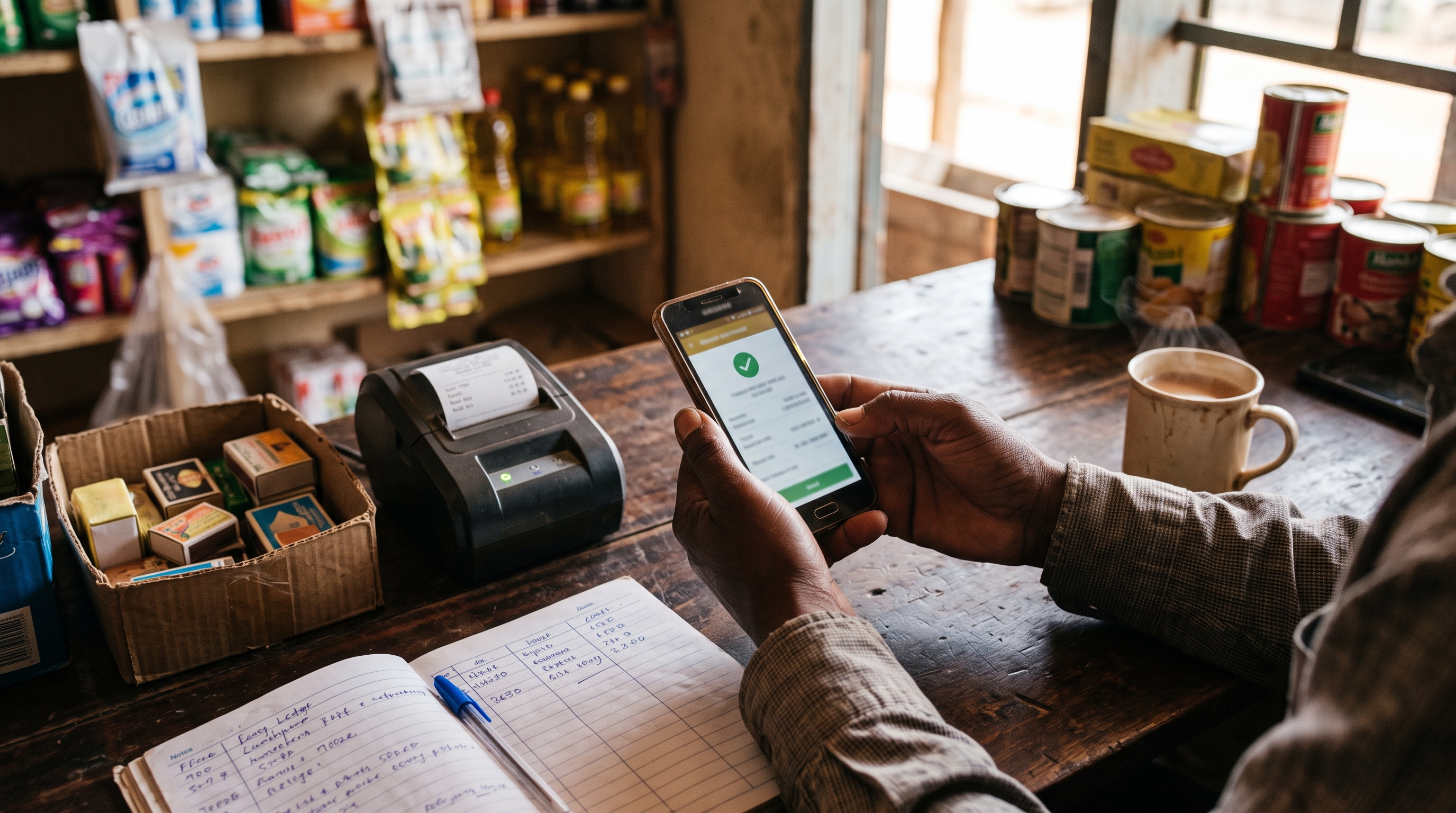
For many African small businesses, the busiest part of the day isn't selling, it's checking. Did the customer pay? Which order does this M-Pesa message belong to? Who still owes us? That detective work is exactly what automation does best. When a mobile money payment lands, a system can match it to an order, send a receipt, update stock, and log it for your accountant, without anyone scrolling through SMS messages.
Why Payment Should Be the Trigger Event
In a typical small business, a payment sets off a chain of manual work: confirm the money arrived, find the order, tell the customer, update the stock, record the sale. Each step is simple, and together they eat hours. If you let the payment itself start the chain, all of those steps can run automatically within seconds.
The Two Common Ways to Collect
- Prompt-based collection (for example M-Pesa's STK Push): your system asks the customer's phone to approve a specific amount, and you get a result back for that exact request. This makes matching payments to orders easy.
- Customer-initiated payments (for example paying to a Paybill or Till): the customer pays on their own and your system is notified. Matching depends on an account number or reference the customer must type correctly, which is where most errors come from.
Other rails such as MTN MoMo, Airtel Money, Paystack, and Flutterwave follow the same general pattern, though each has its own documentation, fees, and approval process. Read each provider's current developer docs before you design anything. Going live with a payment API typically requires a registered business shortcode or merchant account and the provider's approval.
The Basic Automation Flow
Order created -> payment request sent -> result received (callback) -> verify with provider -> mark order paid -> send receipt on WhatsApp/SMS -> update stock -> log row for accountingThe Rules That Prevent Expensive Mistakes
- Verify, don't just trust the callback. Callbacks can arrive late, arrive twice, or not arrive at all. Confirm important payments by querying the provider's transaction status before you release goods.
- Make every step idempotent. If the same payment notification arrives twice, the second one must do nothing. Store each transaction ID and check it before processing.
- Keep secrets on the server. API keys and consumer secrets must never sit in frontend code or a public repository.
- Match on more than amount. Use the transaction ID, the phone number, the reference, and the time window together.
- Log everything. When a customer says they paid and the system disagrees, a clear log settles it in minutes.
The Messy Cases You Must Plan For
- Partial payments: the customer sends less than the order total.
- Overpayments: they send more, and you need a refund or credit rule.
- Wrong reference: the payment arrives with a mistyped account number and no matching order.
- Late confirmation: the money is in your account but the callback never came.
- Failed or cancelled requests: the customer dismisses the prompt, and the order must not stay stuck as pending forever.
Send every unmatched or odd payment to a short exceptions list for a human to review each morning. The goal is not zero human involvement. It's that humans only see the five payments that need judgment, not the five hundred that don't.
Automation doesn't remove the need to check payments. It moves the checking from every transaction to only the strange ones.
From Payments to Clean Books
Once each payment is a structured record, bookkeeping gets easier. Write every confirmed transaction to a sheet or database with date, amount, customer, order, and reference. Reconcile it against your provider's statement weekly. Your accountant or tax preparer then receives clean data instead of a folder of screenshots.
Key takeaway
Mobile money gives African businesses something many markets lack: instant, digital, trackable payments. Treat each payment as a trigger, build for the messy cases (late callbacks, wrong amounts, duplicates), and verify before you act. Do that, and your receipts, stock, and books update themselves, and you stop paying people to read SMS messages.
Written by
Muchiri Mwangi
I build AI automation and workflow systems for businesses, with a focus on practical results over hype.
More about meKeep reading
- Business Strategy
A 90-Day AI Automation Roadmap for an African SME (Without a Big Budget)
October 7, 2026 · 11 min read
- Business Strategy
You Don't Have an AI Problem—You Have a Fear Problem. Here's How to Fix It.
July 25, 2026 · 12 min read
- Business Strategy
You’re Asking the Wrong Question About AI Automation (And It’s Costing You Millions)
July 18, 2026 · 13 min read